
Peter Petersen Toft (1825-1901).
Born on 2 May 1825 in the historic seaport of Kolding, Denmark, Peter Petersen Toft was educated in his native land, where he developed a sharp eye for draftsmanship and architectural precision. However, the confines of a traditional European art education could not hold his adventurous spirit. At just sixteen years old, Toft abandoned a conventional path and signed onto a whaling ship. This early maritime career served as his true studio; sailing across vast oceans, he began documenting the world's most remote harbours, coastal topologies, and frontier outposts. His hunger for adventure eventually brought him to North America, where military records and historical biographies note that during the mid-1840s, he temporarily traded his sketchbook for a uniform to serve in the U.S. Army during the Mexican-American War.
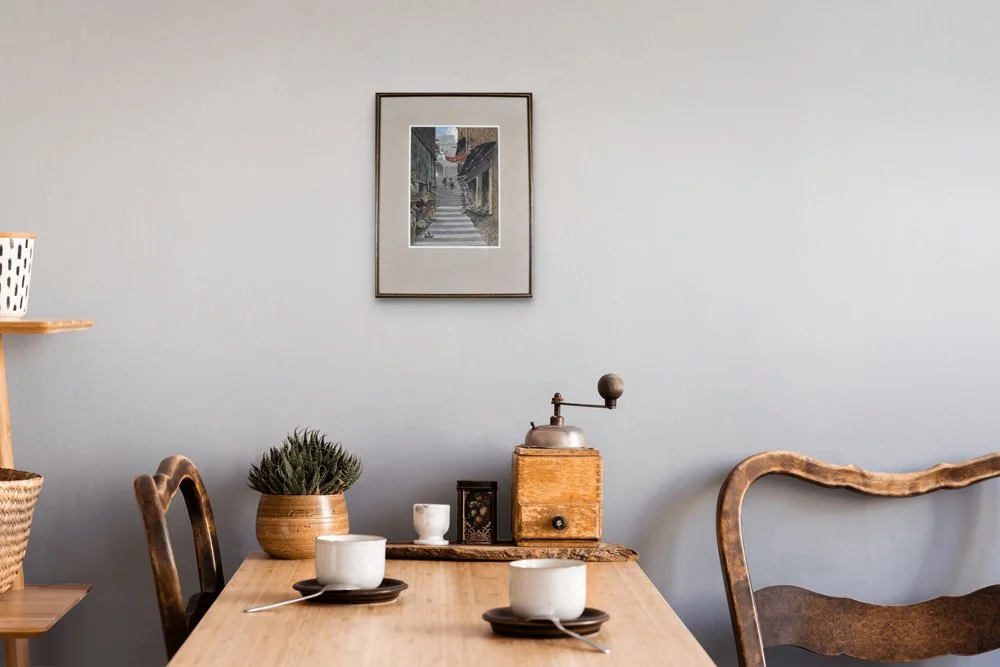
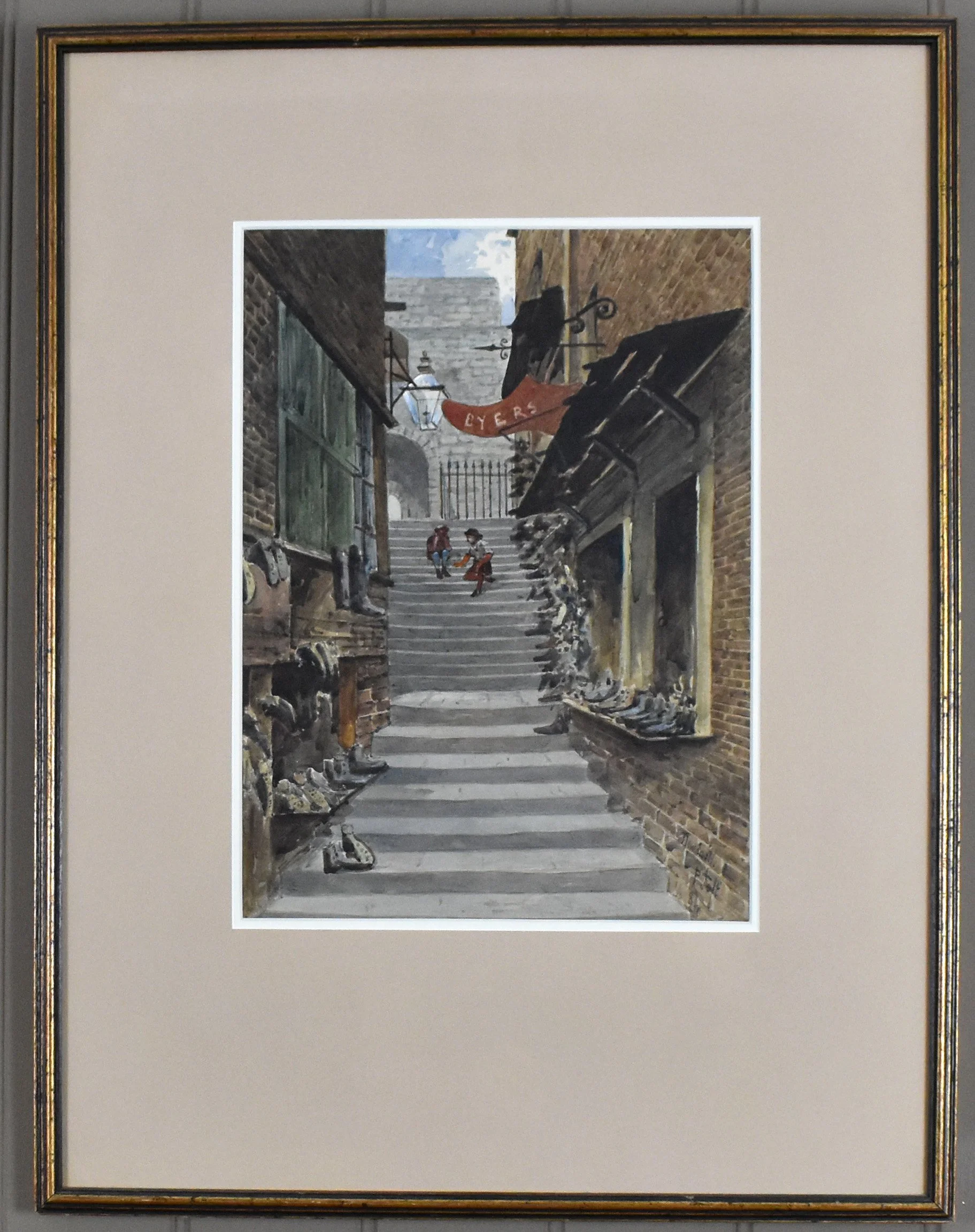
Photo credit: Galleriedesart.
In 1849, the allure of fortune drew Toft directly into the crucible of western expansion. He sailed into San Francisco Bay aboard the ship Ohio, arriving at the height of the California Gold Rush. Like thousands of others, Toft headed into the wilderness, unsuccessfully panning for gold along the Trinity River. Realizing his fortune lay in his brush rather than a shovel, he returned to San Francisco to provide illustrations to local publications and build a reputation for capturing raw, firsthand accounts of the West. Throughout the 1850s and 1860s, Toft went on extensive painting excursions through uncharted territories, travelling deep into the Oregon Territory, Washington, and British Columbia to map out rugged coastlines and emerging settlements. In 1865, Toft collaborated with the Civil War general and Acting Governor of Montana, Colonel Thomas Francis Meagher. The two planned a comprehensive series of illustrated articles for Harper's New Monthly Magazine, prompting Toft to travel to New York to see the first article, "A Ride into Montana," through to publication. This historic project came to an abrupt, tragic end when Meagher mysteriously fell from a steamboat and drowned in the Missouri River. A devastated Toft returned briefly to California before making the decision to return to Europe in 1868.
After a brief return to his hometown of Kolding in 1869, Toft permanently relocated to London in 1870, establishing a base that he would keep for the rest of his life. London provided Toft with a highly sophisticated market that deeply appreciated his delicate handling of light, shade, and topographical accuracy. He successfully transitioned from a rugged frontier illustrator to an acclaimed gallery artist, becoming a regular exhibitor at the prestigious Royal Academy of Arts in London between 1871 and 1881, while routinely sending works back to Denmark to be shown at the Charlottenborg Palace exhibitions. While based in London, Toft never truly stopped wandering. He spent the late 1870s and early 1880s travelling the British countryside. It was during this golden era that he spent significant time in Newcastle upon Tyne, capturing the city's cobblestone streets, medieval infrastructure, and industrial working class, including his notable 1881 watercolour Boot Sellers In a Street Scene In Newcastle. He also ventured frequently into the UK Channel Islands, painting celebrated coastal landscapes of the Islands of Sark and Guernsey. In his final decades, Toft took his watercolours to the Middle East and Southern Europe, producing striking, culturally significant Orientalist views of Jerusalem, Damascus, and classical ruins in Greece.
Peter Petersen Toft passed away in his London home on 17 December 1901 at the age of seventy-six. Because he was an eyewitness to the birth of the American West and the peak of industrial Victorian Britain, Toft's works are treated today as priceless historic documents. His masterpieces are preserved for the public in major global institutions, including the Laing Art Gallery in Newcastle upon Tyne, the Oakland Museum of California, the Bancroft Library at UC Berkeley, the Montana Historical Society, and the Smithsonian American Art Museum in Washington D.C.
‘What could be more simple and more complex, more obvious and more profound’.
(Charles Baudelaire).
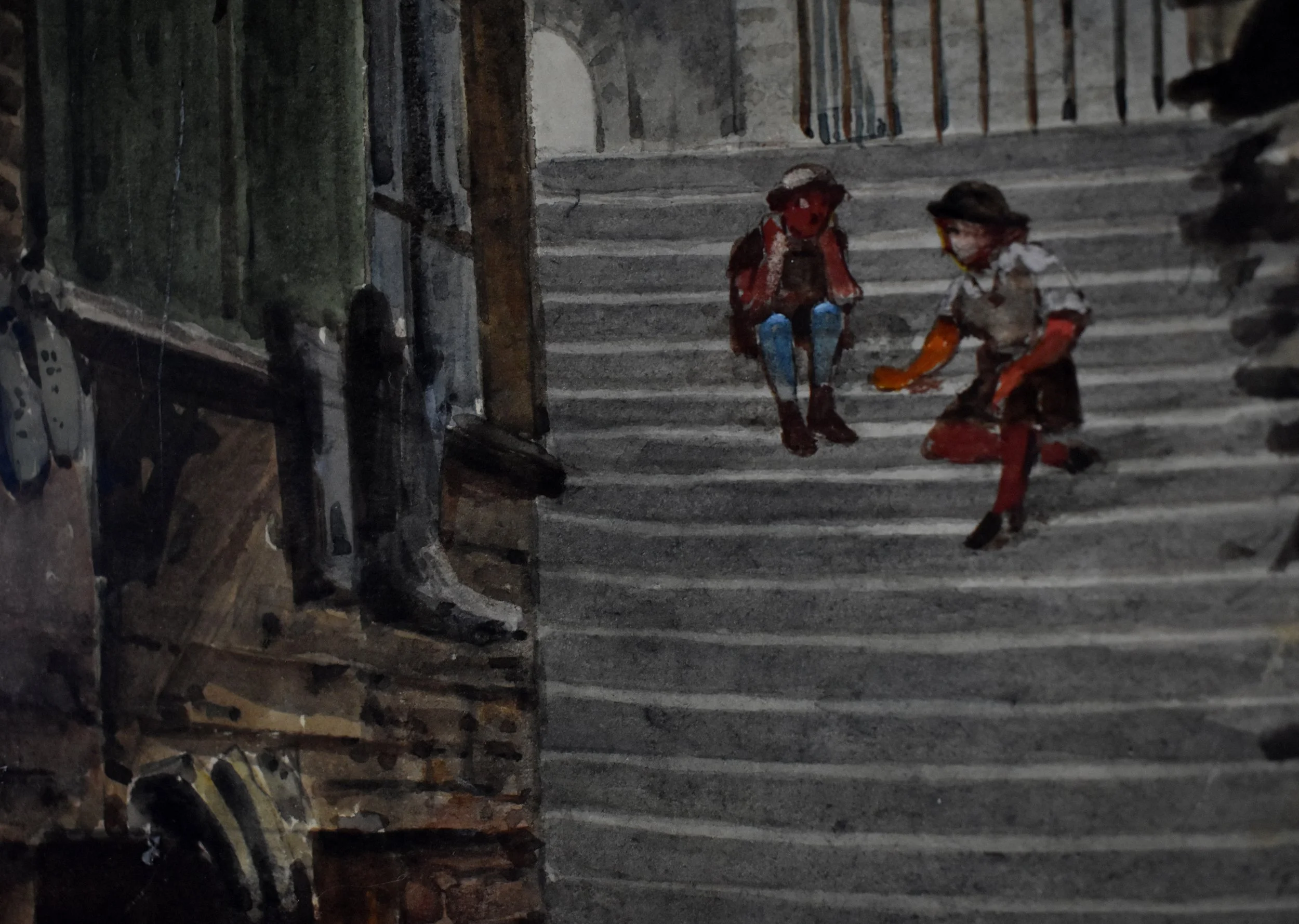
Photo credit: Galleriedesart