
Giovanni Maria Mossa (1896-1982).
Giovanni Maria Mossa was a 20th-century Italian realist painter and mentor whose powerful figural work gracefully bridged the raw regional traditions of his native Sardinia with the sophisticated, cosmopolitan elegance of a mid-century Milan.
Born in Tempio Pausania, Sardinia, in 1896, Mossa left his home island as a young man to immerse himself in the competitive art world of mainland Italy. His formative years were briefly interrupted by the First World War, during which he returned to fight alongside his countrymen in the legendary Brigata Sassari (Sassari Infantry Brigade). Following the armistice, he committed himself fully to his craft, entering Milan’s world-renowned Brera Academy of Fine Arts. Studying under the highly influential Italian masters Cesare Tallone and Ambrogio Alciati, Mossa absorbed a classical command over human anatomy, fluid brushwork, and atmospheric tone. His exceptional talent was recognized immediately by the institution; he claimed the academy's prestigious Hayez Prize in 1921 for his piece Study of a Nude, and followed it in 1924 with the coveted Canonica Prize for The Wrestler.
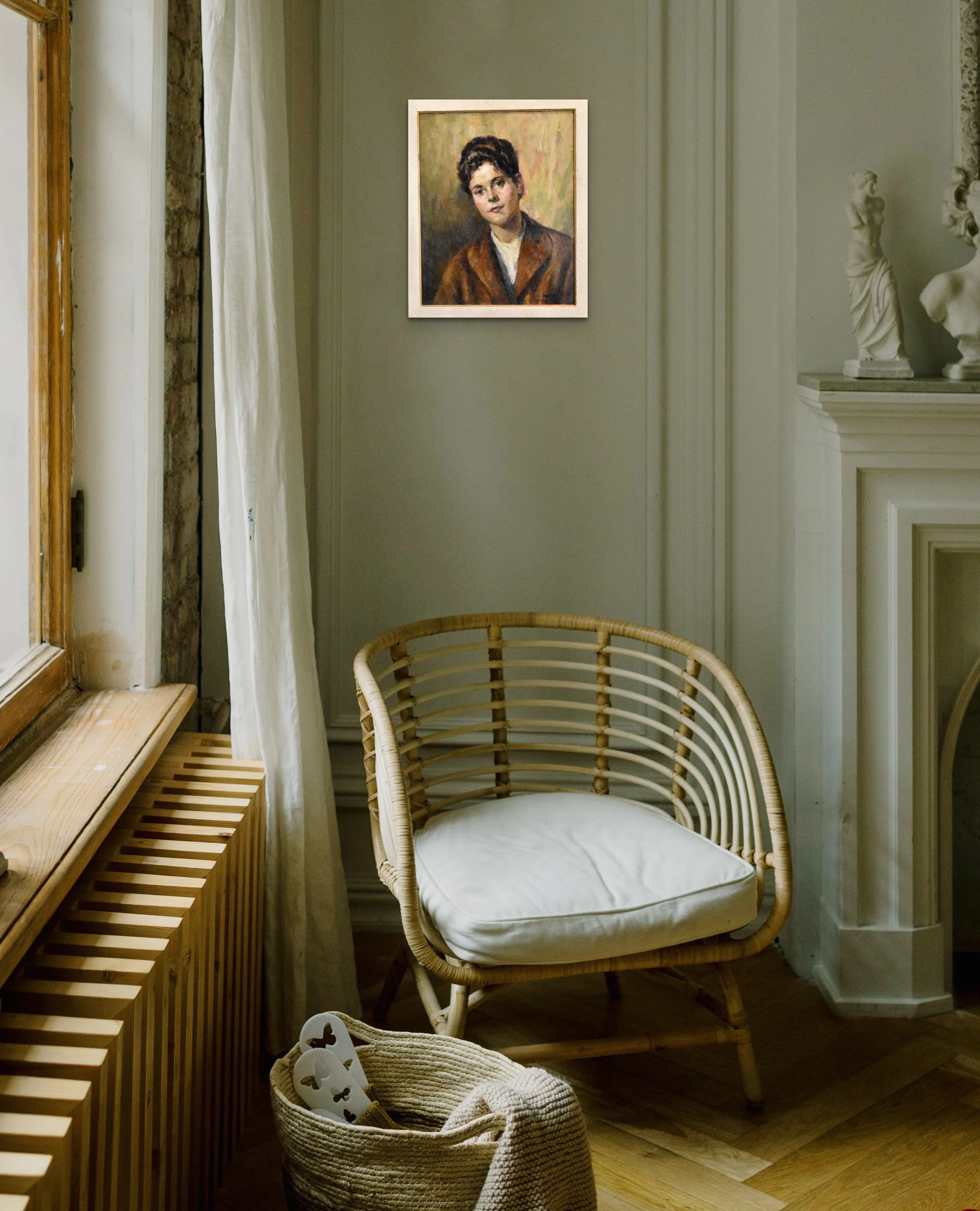
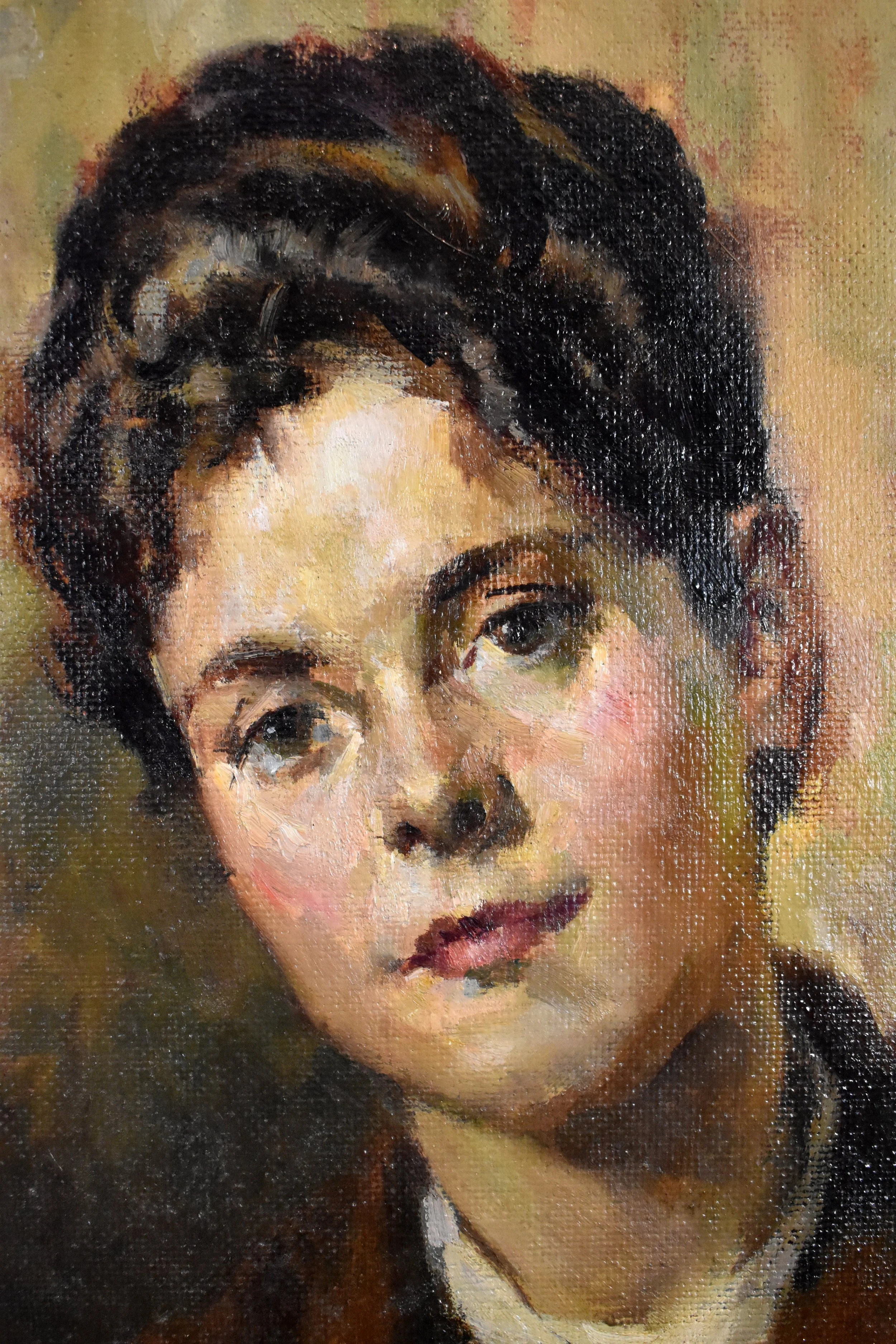
Photo credit: Galleriedesart.
Mossa’s national breakthrough occurred at the 1923 Brera National Exhibition, where he debuted his monumental, life-sized oil painting, Popolana in Costume Sardo (A Woman of the People in Sardinian Costume). This striking work perfectly encapsulated his artistic identity: an unyielding pride in his Sardinian heritage treated with the grand, rigorous execution of high fine art. The masterpiece was instantly lauded and subsequently acquired for the prestigious corporate art collection of the Cariplo Foundation in Milan. Though he returned to Lombardy by the 1940s—where he became a revered master and vital artistic mentor to prominent painters like Aldo Parmigiani—Mossa's work always maintained what Italian critics celebrated as an "animo gentile" (a gentle or noble soul). His portfolios of intimate portraits, including beautifully preserved mid-century oil paintings like his 1956 Portrait of a Young Lady wearing a brown coat, remain highly valued by fine art dealers like the Galleriedesart for their atmospheric depth, subtle psychological insight, and fluid, textured brushwork.
To fully appreciate the gravity of Mossa’s craftsmanship, one must look closely at the crucible that forged him: the Accademia di Belle Arti di Brera (The Brera Academy). Founded in Milan in 1776 by the Habsburg Empress Maria Theresa of Austria, the Brera Academy was conceived as an ambitious, radical Enlightenment project. For centuries prior, European artistic training had been restricted to the insular, secretive system of private workshops and trade guilds, where students merely copied the style and biases of a single master. Maria Theresa’s vision was to demolish this outdated framework, creating a secular "citadel of arts and sciences" that subjected fine art education to public supervision, institutional rigor, and open cultural discourse. Housed inside the monumental 17th-century Palazzo Brera—a sweeping complex that concurrently accommodated a grand public library, an astronomical observatory, and an expansive botanical garden—the academy was intentionally engineered to blend technical artistic mastery with broader scientific and philosophical knowledge.
By the dawn of the 19th century, the academy's international importance expanded under Napoleon Bonaparte, who established its companion museum, the Pinacoteca di Brera, on the explicit model of the Louvre. The collection was quickly flooded with masterpieces confiscated from conquered territories and dissolved monasteries, placing works by Raphael, Mantegna, Titian, and Rembrandt directly at the fingertips of the academy's students. As the 19th and 20th centuries progressed, Brera evolved into the definitive epicenter of the Italian artistic avant-garde. It was the birthplace of Romanticism under Francesco Hayez—the master for whom Mossa's 1921 prize was named—and later became the battleground for the Macchiaioli, Divisionist, and Futurist movements. For an artist like Giovanni Maria Mossa, walking through the doors of the Palazzo Brera meant stepping into an elite lineage of excellence. Learning within its historic walls required measuring one's contemporary perspective against the absolute heights of European art history, ensuring that every brushstroke carried a profound weight of cultural heritage.
‘What could be more simple and more complex, more obvious and more profound’.
(Charles Baudelaire).
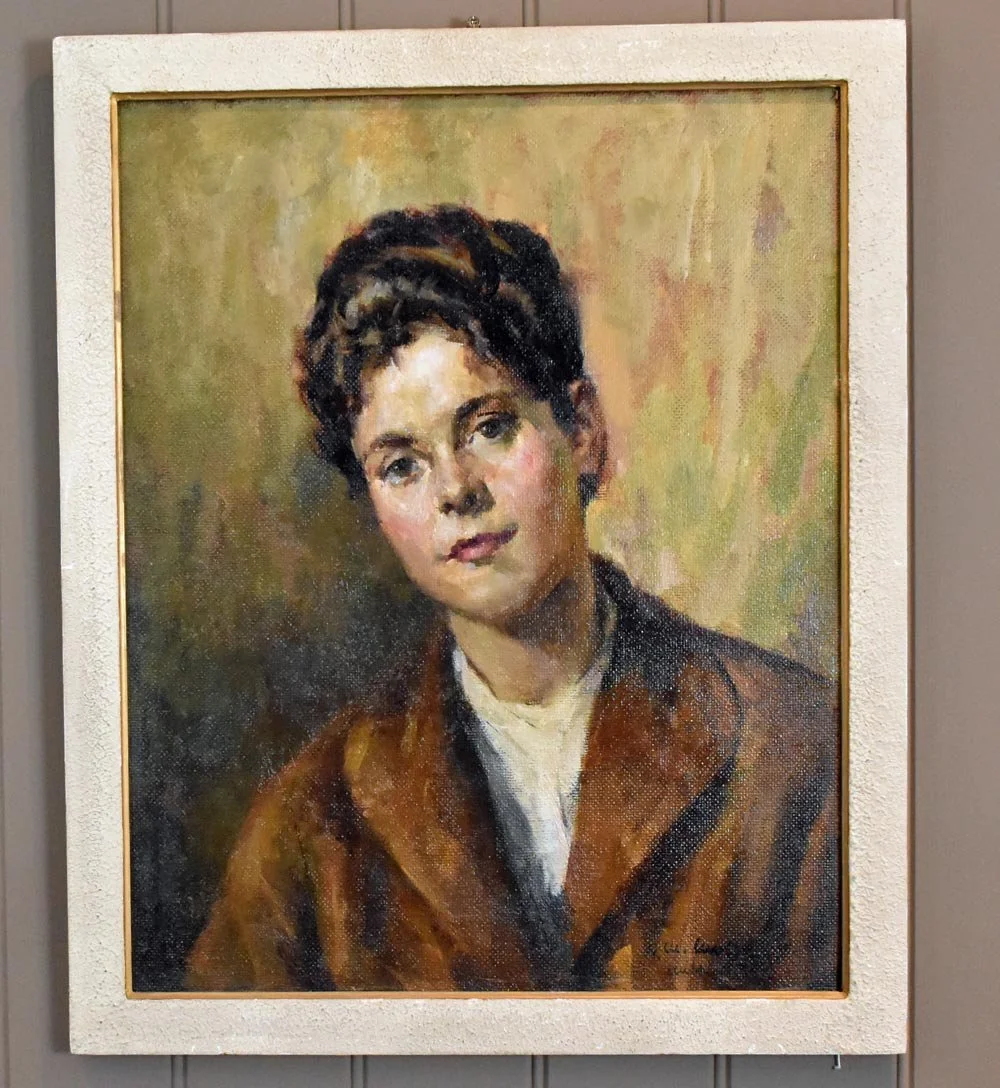
Photo credit: Galleriedesart