
Alida Sophia Hendriks (1901-1984).
Alida Sophia Hendriks was a distinguished Dutch painter and draughtswoman whose meticulous realist style defined her presence in the mid-century European art scene. Born on 3 June 1901 in The Hague, Netherlands, Hendriks dedicated her life to capturing the subtle elegance of nature and the human form, working almost exclusively from her lifelong base in her home city until her passing on 15 August 1984.
Her formal training was shaped by prominent Dutch masters Willem van den Berg and Cornelis Mension. Under their guidance, she developed a disciplined control over texture and lighting, which allowed her to transition seamlessly between intricate graphite drawings, delicate etchings, and layered oil paintings. As her career flourished during the interwar and post-war periods, she became an active and respected member of the prestigious Pulchri Studio, an influential Dutch art society in The Hague that served as a vital hub for contemporary artists.
The pinnacle of Hendriks's national recognition arrived in the winter of 1939 when her work was selected for the landmark Onze Kunst van Heden (Our Art of Today) exhibition held at the Rijksmuseum in Amsterdam. To understand the weight of this achievement, one must view the Rijksmuseum not simply as a gallery, but as the premier sanctuary of art history in the Netherlands. As the global home of Dutch Golden Age masterpieces by Rembrandt, Vermeer, and Frans Hals, the Rijksmuseum stands as a monumental seat of art history, representing the absolute pinnacle of European cultural prestige.
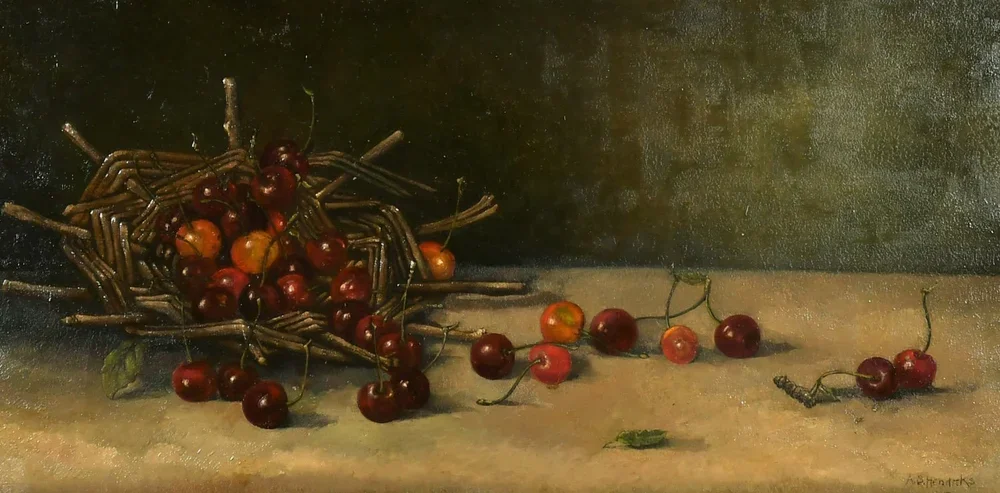
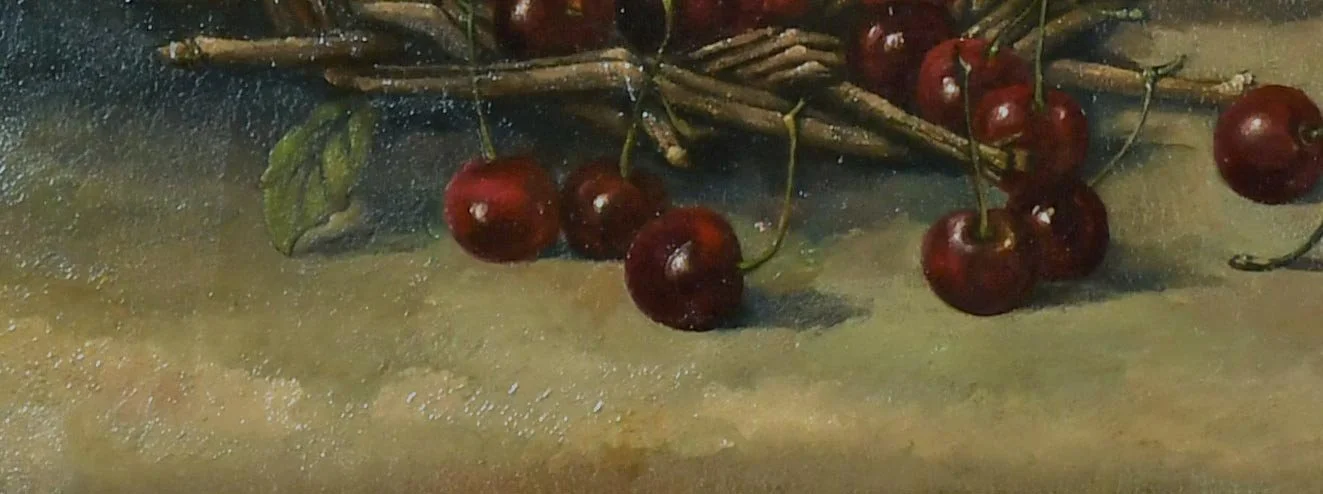
Photo credit: Galleriedesart.
he 1939 exhibition occurred under extraordinary, historic circumstances. With the clouds of the Second World War gathering over Europe, the Dutch government took the drastic step of evacuating the museum's permanent collection—including irreplaceable masterpieces like Rembrandt's The Night Watch—to secure underground bunkers. Left with vast, echoing, empty galleries, the museum's director, Frederik Schmidt Degener, transformed the space into a grand, defiant showcase for living Dutch talent. Curated across 74 rooms, this exhibition allowed contemporary figures like Hendriks to hang their creations directly upon the walls typically reserved for the old masters. For a working artist, having her art displayed in the literal shadow of the Dutch masters, within the definitive seat of the nation's artistic identity, solidified her position within the canon of 20th-century Dutch realism.
Throughout her career, Hendriks's portfolio remained grounded in a quiet, contemplative figuration. She was highly regarded for her intimate portraits, which were praised for capturing the distinct, dignified character of her subjects, as well as her detailed studies of wildlife. However, she remains widely appreciated for her exceptional still lifes, beautifully exemplified by her masterfully rendered oil painting Still Life of Cherries. Measuring 10" x 19.5" (25 x 49.5cm), this specific piece captures the true essence of her talent. It features a humble arrangement of rich, glossy fruit brought to life with a luminous, atmospheric depth against a deeply shadowed background. Authentic to her meticulously documented working methods, the painting is clearly signed by the artist and features her distinct, hand-written inscription on the verso. By anchoring her mid-century modern perspectives in the rigorous precision of traditional Dutch realism, Alida Sophia Hendriks created a body of work that continues to endure as a classic, sought-after example of fine Dutch craftsmanship.
‘What could be more simple and more complex, more obvious and more profound’.
(Charles Baudelaire).
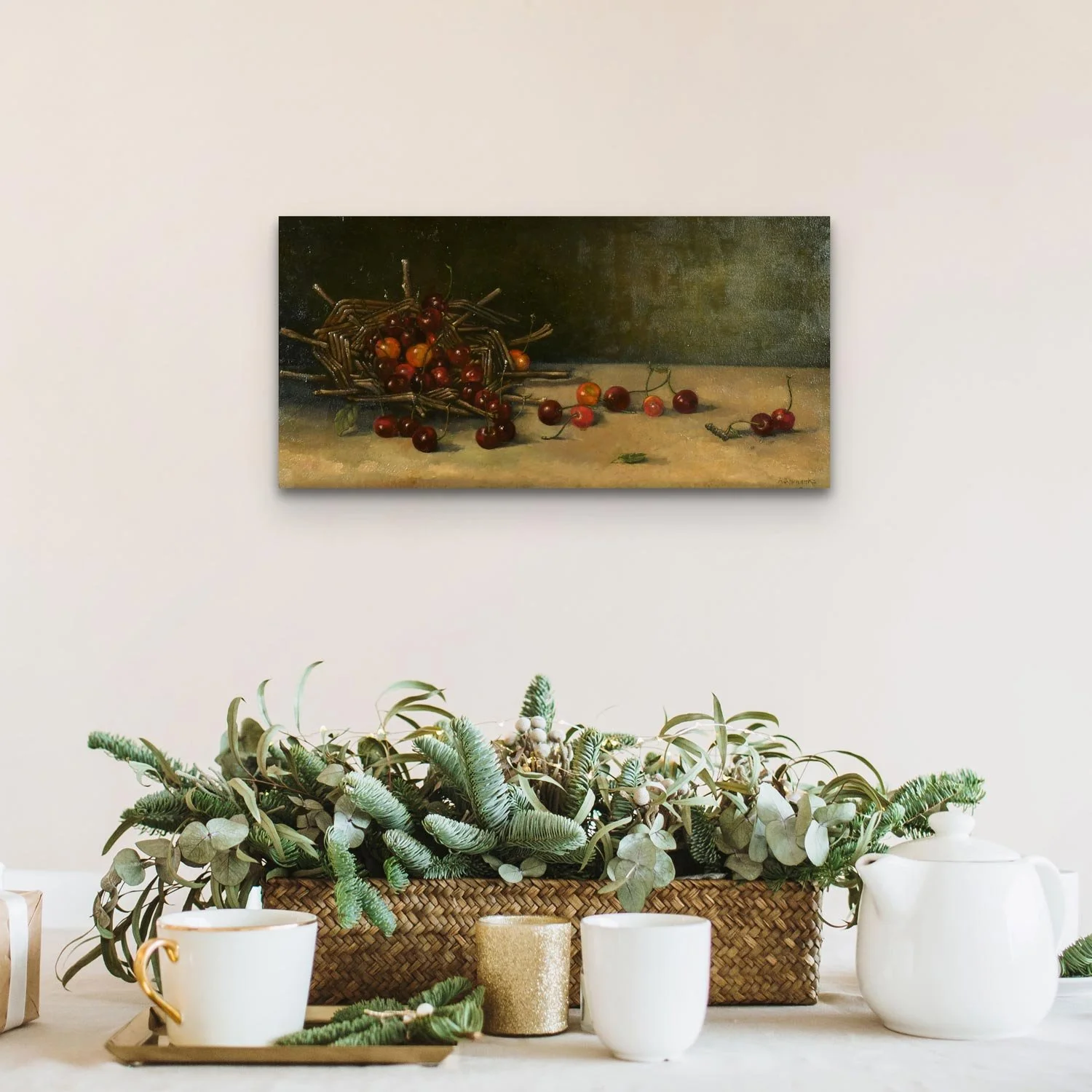
Photo credit: Galleriedesart
Alida Sophia Hendriks died on 15th August 1984, in The Hague, Netherlands.
(James) - galleriedesart.com.
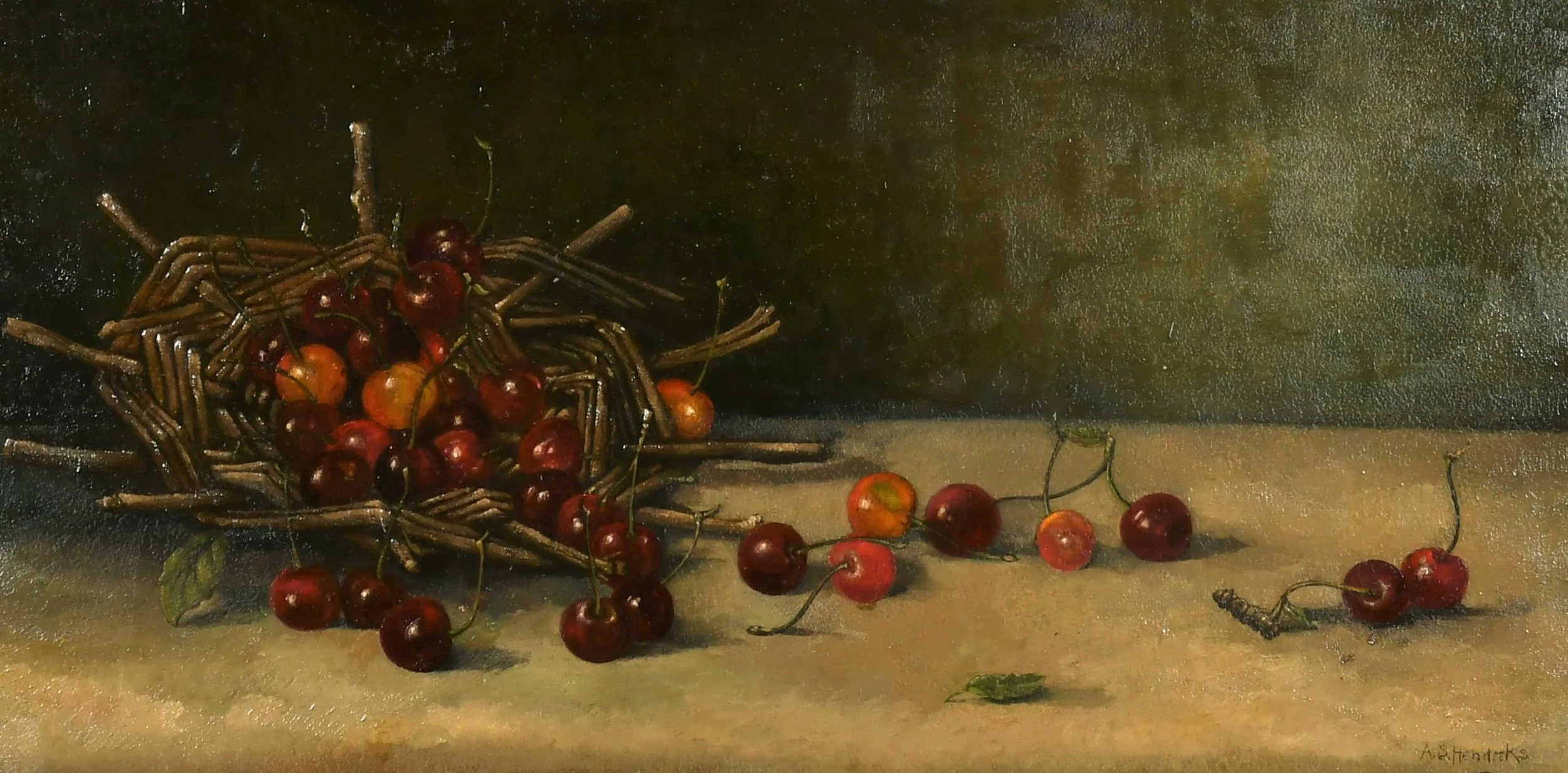
Photo Credit: Galleriedesart.